
Many med spas ride a revenue roller coaster — with big months followed by unpredictable slowdowns — not because demand is weak, but because key systems are missing or leaking profit. In this blueprint, expert consultant Melissa French explains how intentional design around client retention, treatment conversion, and revenue predictability transforms chaotic growth into consistent, sustainable performance.
From Revenue Roller Coaster to Reliable Growth
Medical aesthetics has moved from niche to mainstream. In the U.S. and Canada, demand for aesthetic treatments has never been higher. According to the American Med Spa Association (AmSpa), there are now over 8,800 med spas in North America, and revenues are climbing at double-digit rates (AmSpa, 2024). Globally, the market is projected to hit $21.47 billion in 2025, up from $18.88 billion in 2024 — a 13.7% annual growth rate (Baird, 2025).
On paper, it looks like every owner should be thriving. Yet for many, the reality is more stressful. Instead of steady gains, they ride a revenue roller coaster. One month flush with cash, the next scraping to cover payroll. The unpredictability isn’t just inconvenient; it’s emotionally draining. Owners lie awake wondering if they’ll make rent. Staff wonder if they’ll get the hours they need. Clients sense inconsistency that erodes trust.
So why does growth remain elusive in such a booming industry? The answer lies in silent revenue leaks. These are operational gaps that often go unnoticed. Revenue slips away in small but costly ways: consultations that fail to convert into treatments, no-shows that aren’t rebooked, memberships that lapse without renewal, and clients who drift to competitors offering quick discounts.
The good news: these leaks are solvable. By installing systems to catch what falls through, owners can transform unpredictable revenue into sustainable success. In this article, we’ll explore three core drivers of med spa performance — client retention, conversion, and predictability — plus the hidden leaks that drain profits and how to fix them.
Client Retention: The True Measure of Loyalty
Client retention is the lifeblood of a lasting med spa. According to AmSpa, 73% of med spa patients are repeat clients, up from 65% just two years ago (AmSpa, 2024). That jump shows loyalty is possible, but it doesn’t happen by accident.
Why Client Retention Matters More Than New Leads
Client retention is not just about keeping your calendar full — it’s about protecting profits. Every new client costs money to attract: advertising, staff time, social media campaigns. Retained clients, by contrast, are less expensive to serve and often spend more over time. Research has shown that a modest 5% increase in retention can raise profits by 25–95% (PatientNow, 2024).
Imagine this: A client who returns quarterly for injectables or laser treatments represents $5,000 a year. If they drop off after just one or two visits, you capture only $1,250–$2,500—losing 50–75% of their annual value. Repeat that across a few dozen clients, and the shortfall can easily exceed six figures.
Where Client Retention Breaks Down
- Injectables should guarantee repeat visits, but clients disappear if they’re not rebooked at checkout.
- Laser and device packages lose value when clients don’t finish their plan, often because no one followed up.
- Memberships — one of the best tools for retention — fail when they aren’t actively tracked and renewed.
- Price shopping is a growing trend. Many patients jump spas for a discount, treating aesthetic care like a commodity.
When clients see your spa as interchangeable with the one down the street, loyalty vanishes. The challenge is to prove you value them in ways competitors don’t.
Strategies to Build Loyalty
- Emphasize outcomes over price. If clients only hear, “$10 per unit of Botox,” they’ll shop around. Instead, say: “Most patients enjoy smoother lines for four to six months, and we’ll schedule a follow-up to keep your results looking their best.”
- Design rewarding memberships. Loyalty pricing, priority scheduling, and small perks show clients they are valued.
- Stay connected between visits. Send post-treatment tips, progress check-ins, or reminders for their next session. Most competitors won’t bother — this alone will set you apart.
Quick Take – Why Clients Leave
Clients don’t leave just because of price. They leave because they don’t feel remembered, valued, or rewarded. If you don’t value them, they won’t value you.
Treatment Conversion: Turning Consultations into Revenue
Retention only matters if clients convert in the first place. Most med spas underestimate how much revenue is lost between a lead’s first inquiry and their first booked treatment.
Industry benchmarks show only 20–30% of leads book a consultation, and of those, only 50–70% commit to treatment (Growth99, 2024). That means as much as two-thirds of your potential revenue disappears before the first syringe is opened.
Why Conversions Stall
- Inconsistent consultations. Without a framework, staff approach consultations inconsistently. Key questions are missed, and outcomes vary widely.
- Weak follow-up. One unanswered call or message, and the lead is gone.
- Lack of urgency. Clients leave saying, “I’ll think about it,” and rarely return.
The Conversion Framework
- Build rapport fast. Clients buy trust before treatments. Train staff to connect personally in the first minutes.
- Frame outcomes, not costs. Instead of, “This package is $1,800,” say, “You’ll see noticeable improvements within 4–6 weeks, with results lasting up to a year.”
- Create same-day pathways. Every consultation should end with a next step. Ideally, clients book a treatment before leaving.
Quick Take – Missed Opportunities Happen in the Room
Revenue is often lost during the consultation itself. Clear communication, active listening, and a confident next step dramatically increase the likelihood of commitment.
Revenue Predictability: Beyond the Guesswork
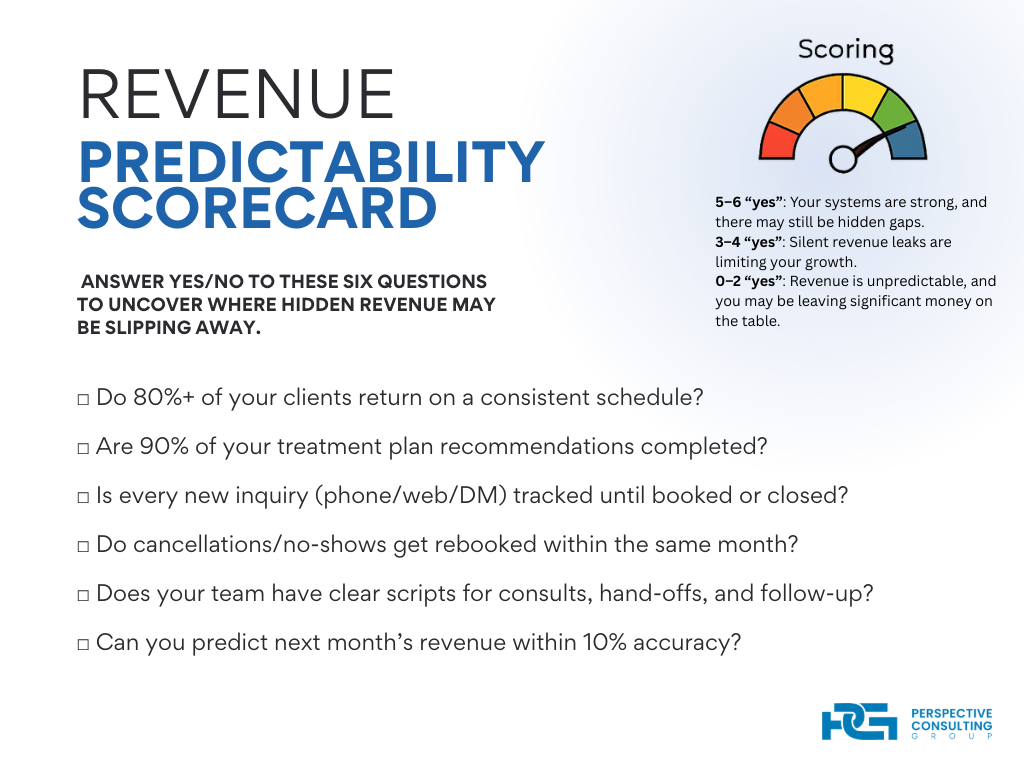
The average med spa generates $1.4 million annually, with profit margins in the 20–25% range (Liguori CPA, 2024). Yet most owners can’t forecast next month’s revenue within 10%. That lack of predictability makes it difficult to plan staffing, marketing, or equipment investments with confidence.
Why Predictability Matters
Unpredictable revenue destabilizes staff who worry about hours or commissions and creates hesitation to invest in growth. Predictability gives everyone confidence — owners can make solid decisions, and staff feel secure in their roles.
Building Predictable Revenue
- Recurring revenue models. Memberships, prepaid packages, and subscription skincare create a revenue floor each month. One hundred members at $150/month = $15,000 before the month even begins.
- Monthly KPI (Key Performance Indicator) reviews. Track retention, rebooking, average spend per client, and conversion. Spot issues early and act before they hit your bottom line.
- Weekly accountability rhythms. A 15-minute Monday huddle reviewing consults booked, no-shows recovered, and renewals, keeps everyone focused.
Quick Take – The Stress of Guesswork
Few things are more stressful than not knowing what’s ahead. Predictability replaces that stress with clarity and gives owners peace of mind with the ability to plan for growth.
Silent Revenue Leaks: Where Med Spas Lose the Most
In my audits, I repeatedly see the same preventable leaks:
- Low treatment conversion rates. Every missed consultation-to-treatment handoff wastes marketing dollars and leaves revenue on the table.
- No-shows without rebooking. Even a 10% no-show rate can drain $15k–$50k annually in lost treatments.
- Incomplete treatment plans. Clients stop mid-package, losing both results and revenue.
- Missed renewals. Expired memberships equal lost recurring income.
- Poor follow-up cadence. A single call attempt is not a follow-up strategy.
Each of these issues is operational, not inevitable. With the right processes, they can all be solved.
Building Systems Without Burning Out Your Team
Strong systems are the backbone of sustainable growth. Strong systems reduce stress for staff while ensuring consistency for clients.
Practical systems include:
- Standardized scripts and templates for consultations, renewals, and follow-ups.
- Technology integrations that automate reminders and track client milestones.
- Weekly scorecards that give the team visibility into results and progress.
When staff understand the “why” behind each system, adoption improves. For example: “We send renewal reminders so members feel cared for” motivates far more than “Management told us to.”
Case Study: Breaking the Cycle of Unpredictable Revenue
A five-year-old med spa with little local competition should have been thriving. Instead, the owner was exhausted, trapped in a cycle of busy months followed by long slumps.
Issues We Found
Results (within 90 days):
- Predictable revenue rose 28% without additional ad spend.
- Staff stabilized, and morale improved.
- Online reviews and reputation strengthened.
- Most importantly, the owner felt relief — moving from daily firefighting to leading with confidence.
Conclusion: Building a Med Spa That Lasts
The ultimate measure of a med spa’s success is not how busy it looks on its best days. It is how consistently it performs over time. Stability creates strength. When revenue is reliable, owners lead with confidence, teams stay motivated, and clients feel secure in the care they receive.
The path to that stability is clear. By focusing on client retention, treatment conversion, and revenue predictability, you eliminate the silent leaks that drain profit and replace guesswork with control. These are not abstract ideas — they are practical systems that determine whether a business merely survives or truly thrives.
Sustainable growth is not the result of luck or trends. It is the outcome of intentional design. A med spa built on strong systems becomes more than a business — it becomes a trusted institution in the community, a place where clients return confidently, staff see a future, and the owner has the freedom to think beyond the next payroll cycle.
The opportunity is here. The demand for aesthetic services will only continue to rise. The question is whether your business is prepared to capture that growth in a way that lasts.
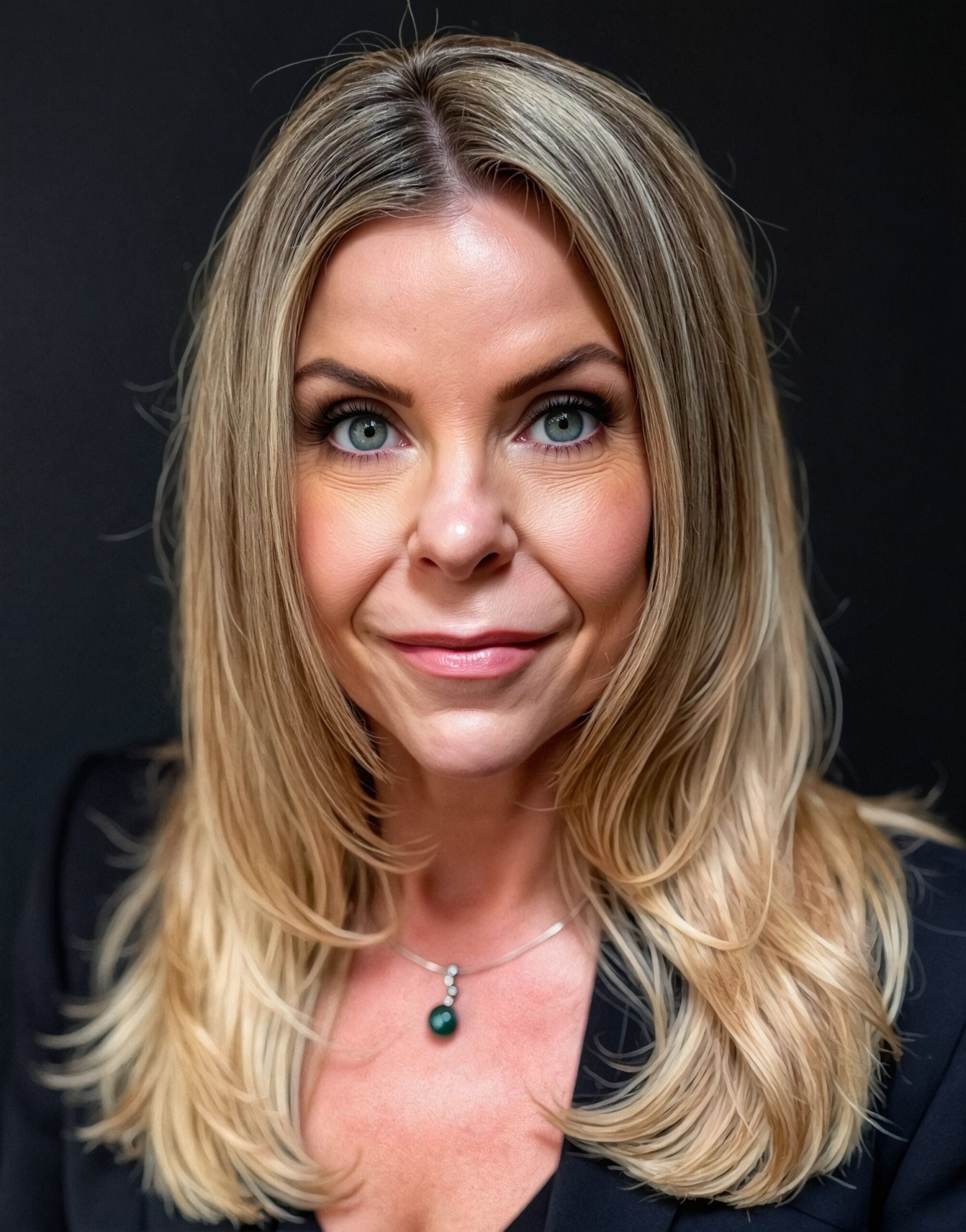
Melissa French
Founder of Perspective Consulting Group
Melissa French is the Founder of Perspective Consulting Group. She advises med spas, private practices, and healthcare organizations on building revenue systems that eliminate leaks, strengthen client retention, and ensure sustainable growth. A recognized contributor to industry publications, she is also the creator of the Growth & Retention Audit™ and Revenue Predictability Scorecard™. Learn more at www.perspectiveconsults.com.